Great video quality is important, but great audio can make an even bigger difference in how professional your content feels. Whether you create YouTube videos, TikToks, Instagram Reels, podcasts, interviews, livestreams, or vlogs, choosing the right microphone can dramatically improve your content.
The good news is that you don’t need an expensive studio setup to get clear, professional-sounding audio.
In this guide, we’ve rounded up some of the best microphones for content creators in 2026, including wireless microphones, USB microphones, dynamic microphones, and on-camera options.
1. DJI Mic 3 — Best Overall Microphone for Content Creators

- Lightweight & Intuitive, Compact Storage [9] – Take it anywhere—this wireless mic fits in your pocket or bag, ready for …
- 4TX + 8RX Capability & Four-Channel Output [1] – This lavalier mic’s receiver can pair with 4 TX and sync audio to 7 add…
- Consistent, Balanced Audio in Every Scene – Whether you’re whispering or shouting, this wireless mic’s adaptive gain con…
If you want one microphone system that can handle vlogging, interviews, YouTube videos, social media content, and mobile filming, the DJI Mic 3 is one of the strongest options to consider.
Its compact wireless transmitters make it easy to record while moving around, while features such as 32-bit float onboard recording provide additional protection against problematic audio levels.
The small transmitters are also lightweight, which is useful for creators who record for long periods or want their microphone to stay relatively discreet.
Why we like it
- Wireless recording
- 32-bit float onboard recording
- Compact and lightweight transmitters
- Suitable for cameras and smartphones
- Excellent for vlogging and interviews
- Designed specifically with modern content creators in mind
Best for
YouTube creators, vloggers, TikTok creators, interviews, travel content, and creators who shoot on the go.
Verdict: If you want a versatile wireless microphone for content creation, the DJI Mic 3 is an excellent all-around choice.
2. RØDE Wireless PRO — Best Professional Wireless Microphone
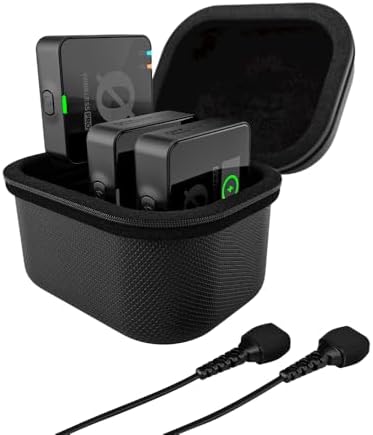
- COMPLETE PRO KIT: 2 transmitters, 1 receiver and charging case, works with cameras, USB-C phones and computers
- NEVER LOSE A TAKE: 32-bit float on-board recording captures a safety copy of every session, clipped audio is fully recov…
- TIMECODE BUILT IN: syncs picture and sound across multi-camera shoots without clapper boards or manual alignment
The RØDE Wireless PRO is designed for creators who want more advanced features and greater flexibility during professional shoots.
It includes two wireless transmitters, making it particularly useful for interviews and two-person videos. It also offers onboard 32-bit float recording, timecode capabilities, and support for external lavalier microphones.
These features make it especially attractive for filmmakers, professional YouTubers, interviewers, and creators working on paid projects.
Why we like it
- 32-bit float onboard recording
- Two transmitters
- Built-in backup recording
- Timecode functionality
- External lavalier microphone support
- Excellent for professional video production
Best for
Professional content creators, filmmakers, interviews, documentaries, weddings, and commercial video.
Verdict: Choose the RØDE Wireless PRO if reliability and professional recording features are more important than getting the smallest or simplest setup.
3. Shure MV7+ — Best Microphone for Podcasting and YouTube

- CUSTOMIZABLE LED TOUCH PANEL: Personalize your setup with a full-color LED touch panel featuring 16.8 million color opti…
- AUTO LEVEL & REAL-TIME DENOISING: Auto Level Mode intelligently adjusts gain based on distance and volume, while the rea…
- BUILT-IN REVERB EFFECTS: Add depth and character to your sound with integrated reverb modes, including Plate, Hall, and …
For creators who primarily record at a desk, the Shure MV7+ is one of the best microphones to consider.
Unlike wireless lavalier microphones, the MV7+ is a dynamic microphone designed for close-up voice recording. It supports both USB-C and XLR connectivity, giving you an easy setup today while allowing you to upgrade your audio setup in the future.
It is particularly useful for podcasts, YouTube videos, voiceovers, interviews, and livestreams.
Why we like it
- USB-C and XLR connectivity
- Dynamic microphone design
- Voice isolation features
- Auto-level functionality
- Excellent for spoken-word content
- Can grow with your setup
Best for
Podcasters, YouTubers, streamers, voiceover creators, and creators recording at a desk.
Verdict: The Shure MV7+ is a great choice if your content focuses heavily on talking, podcasting, or voice recording.
4. Elgato Wave:3 — Best USB Microphone for Streaming

- Premium Condenser Capsule: Delivers focused, studio-quality vocals with a cardioid condenser capsule for professional so…
- Intelligent Anti-Distortion System: Multi-stage Clipguard 2.0 protection makes clipping virtually impossible; Auto Gain …
- Onboard Effects: Enhance your voice with built-in voice enhancer, compressor, EQ, and more; Wave FX Processor unifies DS…
If you’re a streamer or create videos from a desktop setup, the Elgato Wave:3 is a strong option.
The microphone uses a cardioid pickup pattern and connects directly to your computer through USB, making it simple to set up without an audio interface.
One of its biggest advantages is Elgato’s Wave Link software, which allows creators to control and mix different audio sources.
Why we like it
- Plug-and-play USB connection
- 24-bit/96 kHz audio
- Cardioid pickup pattern
- Clipguard technology
- Wave Link software
- Great for desktop setups
Best for
Streamers, YouTubers, gamers, online teachers, and creators who record at a desk.
Verdict: The Wave:3 is one of the best choices for creators who want high-quality USB audio without building a complicated studio setup.
5. RØDE VideoMic GO II — Best On-Camera Microphone

- Ultra-compact on-camera shotgun microphone that instantly improves the audio quality of your videos.
- Highly directional pickup pattern ensures you clearly capture your subject and nothing else
- Incredibly compact and lightweight, measuring just 80mm in length and weighing 39g, VideoMicro II fits in every backpack…
Not every content creator needs a wireless microphone.
If you mostly record with a mirrorless camera and want a microphone mounted directly on the camera, the RØDE VideoMic GO II is worth considering.
Its compact shotgun design helps focus on sound coming from in front of the microphone while reducing some surrounding noise.
It’s especially useful for vloggers, travel creators, product videos, and run-and-gun filming.
Why we like it
- Compact design
- Lightweight
- Easy to mount on a camera
- USB and 3.5mm connectivity
- Great for vlogging
- Simple setup
Best for
Vloggers, travel creators, camera-based YouTube channels, and product reviewers.
Verdict: If you want better audio without wearing a wireless microphone, this is a convenient camera-mounted option.
6. RØDE NT 1 5th Generation — Best Studio Microphone for Content Creators

- Groundbreaking studio condenser microphone that fuses the classic sound signature of the iconic NT1 with patented next-g…
- Connect to an audio interface or mixer via XLR, or plug directly into a computer via USB to record studio-grade sound in…
- Offers the classic warm, silky character, extremely low self-noise and high SPL handling capability that the original is…
he RØDE NT1 5th Generation is an excellent choice for content creators who want professional-quality audio for a home studio or dedicated recording setup.
It is a large-diaphragm condenser microphone that combines USB-C and XLR connectivity, giving creators the flexibility to connect directly to a computer or use an audio interface for a more advanced setup.
Why we like it
The NT1 5th Generation is particularly suitable for voiceovers, YouTube videos, podcasts, vocals, music recording, and other content where detailed and high-quality audio is important.
- USB-C and XLR connectivity
- Professional studio-quality recording
- 32-bit float recording via USB
- Very low self-noise
- Large-diaphragm condenser capsule
- APHEX audio processing via USB
- Excellent for vocals and voiceovers
- Includes a shock mount and pop filter
Best for
YouTubers, voiceover artists, podcasters, musicians, online educators, and home-studio creators.
Verdict: Choose the RØDE NT1 5th Generation if you want professional-quality audio with the flexibility of both USB and XLR connectivity, making it a microphone that can grow with your content creation setup.
How to Choose the Best Microphone for Content Creation
The best microphone depends on the type of content you create.
For vlogging and travel
A wireless microphone is usually the most practical option. It lets you move around freely without keeping the microphone close to the camera.
Best choices: DJI Mic 3 or RØDE Wireless PRO.
For YouTube videos
If you record yourself talking to the camera, you can choose between a wireless microphone and an on-camera microphone.
Best choices: DJI Mic 3, RØDE Wireless PRO, or RØDE VideoMic GO II.
For podcasts
A dynamic microphone is often a better choice for a desk-based podcast setup.
Best choice: Shure MV7+.
For streaming
A USB microphone is convenient because you can connect it directly to your computer.
Best choice: Elgato Wave:3.
What Should You Look for in a Content Creator Microphone?
Before buying a microphone, consider these factors:
1. Microphone Type
The right microphone type depends on how you create content. Wireless microphones are ideal for vlogging, interviews, and mobile content, while USB and XLR microphones are better suited for podcasts, streaming, voiceovers, and desk-based recording.
2. Connectivity
Consider how you plan to connect your microphone. USB microphones can connect directly to a computer, while XLR microphones typically require an audio interface. Wireless microphone systems usually include a receiver that connects to your camera, smartphone, or other recording device.
3. Recording Environment
Your recording environment can have a major impact on audio quality. A microphone cannot completely eliminate background noise or room echo, so creators who record in untreated or noisy spaces should consider a microphone that suits their environmen
4. Portability
If you frequently vlog, travel, or film outdoors, portability is important. Compact wireless microphones and on-camera microphones are easier to carry and set up while recording on the go.
5. Backup Recording
Look for features that can help you capture clean and reliable audio. Some wireless systems offer onboard recording and 32-bit float recording, which can provide extra flexibility when recording changing volume levels and help protect important footage from audio clipp.